What is slow steaming, and why it adds days to a transpacific lane
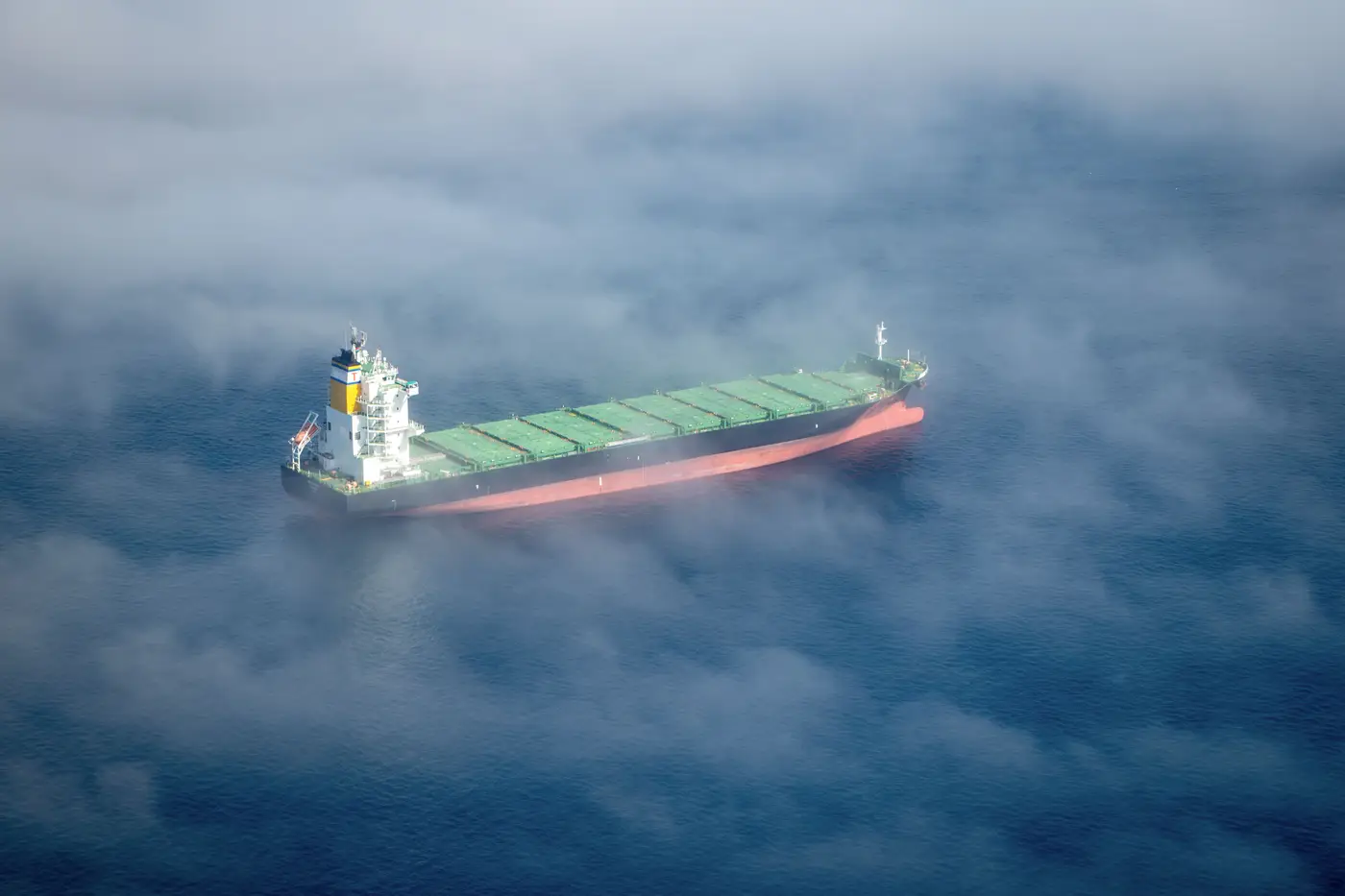
Slow steaming means a carrier runs a vessel below its design speed to burn less fuel per voyage. A container ship built to cruise at 22 to 24 knots gets throttled back to something closer to 18 to 20 knots, and on some strings even lower. The ship still arrives. It just takes longer to get there, on purpose.
This isn't a temporary workaround from a bad year. Carriers started doing it in earnest during the 2008 fuel price spike, found it cut bunker spend enough to keep doing it after prices came back down, and now have regulatory cover to keep doing it: IMO 2020's sulfur cap, plus EEXI and CII efficiency ratings, all reward a slower, lower-emission profile. Slow steaming on transpacific strings is now the default operating mode, not an exception.
Why carriers slow down on transpacific strings
Fuel burn doesn't scale evenly with speed. Cut a vessel's speed by a few knots and the fuel savings per voyage are large enough that most carriers consider it worth the extra transit days, especially on long-haul strings like Shanghai to Long Beach or Yantian to Oakland where there's a lot of ocean to cover. A string running at 18 to 20 knots instead of 22 to 24 can add somewhere in the range of one to three days to a transpacific crossing, more if the vessel is also absorbing extra port calls or sailing a longer rotation to spread capacity across more strings.
None of this is a secret. It shows up in the carrier's own published transit time once they set the schedule. If a string used to run 14 days and now runs 16, that's the slow steaming baked into the base number you're quoted at booking.
How that shows up in the schedule you're quoted
A lot of planning teams miss this: the published transit time already includes the slow steaming. The slower speed is baked into the number you're quoted at booking. The real risk shows up when something adds days on top of that already-slower baseline, and that's a different problem.
A blanked sailing, a vessel queue outside the terminal, a yard running past its fill point, a berth window that slipped because the previous ship ran long. Those are congestion-driven delays, and they stack on whatever buffer the slow steaming schedule already built in. A planner who treats the carrier's published transit time as the full picture misses the part that moves week to week: how backed up the terminal is right now, how long boxes sit in the yard before a truck or rail car picks them up, whether the berth your vessel needs is open when it's supposed to be.
That's the gap most teams end up padding with a flat guess, usually the same number of extra days tacked onto every route regardless of what's happening on it right now. A corridor running clean gets padded for no reason, and one quietly backing up gets treated the same as one that isn't. Lead Time Risk tracks vessel queues, terminal fill and yard dwell on the specific inbound lanes you've registered and turns that into a daily slip-day number per lane, so you know how many days a shipment is running behind the schedule it was booked against, route by route, instead of one guess applied across the board.
Slow steaming explains why a transpacific crossing takes longer than it did fifteen years ago. It doesn't explain why one container sits at anchorage for a week while another clears the terminal on time. That second question is the one that changes your downstream planning, and it's the one worth watching lane by lane instead of assuming away.
If you're still padding every lead time by the same flat guess, that's worth a look.