What a port rotation is, and why a schedule change adds days to your lane
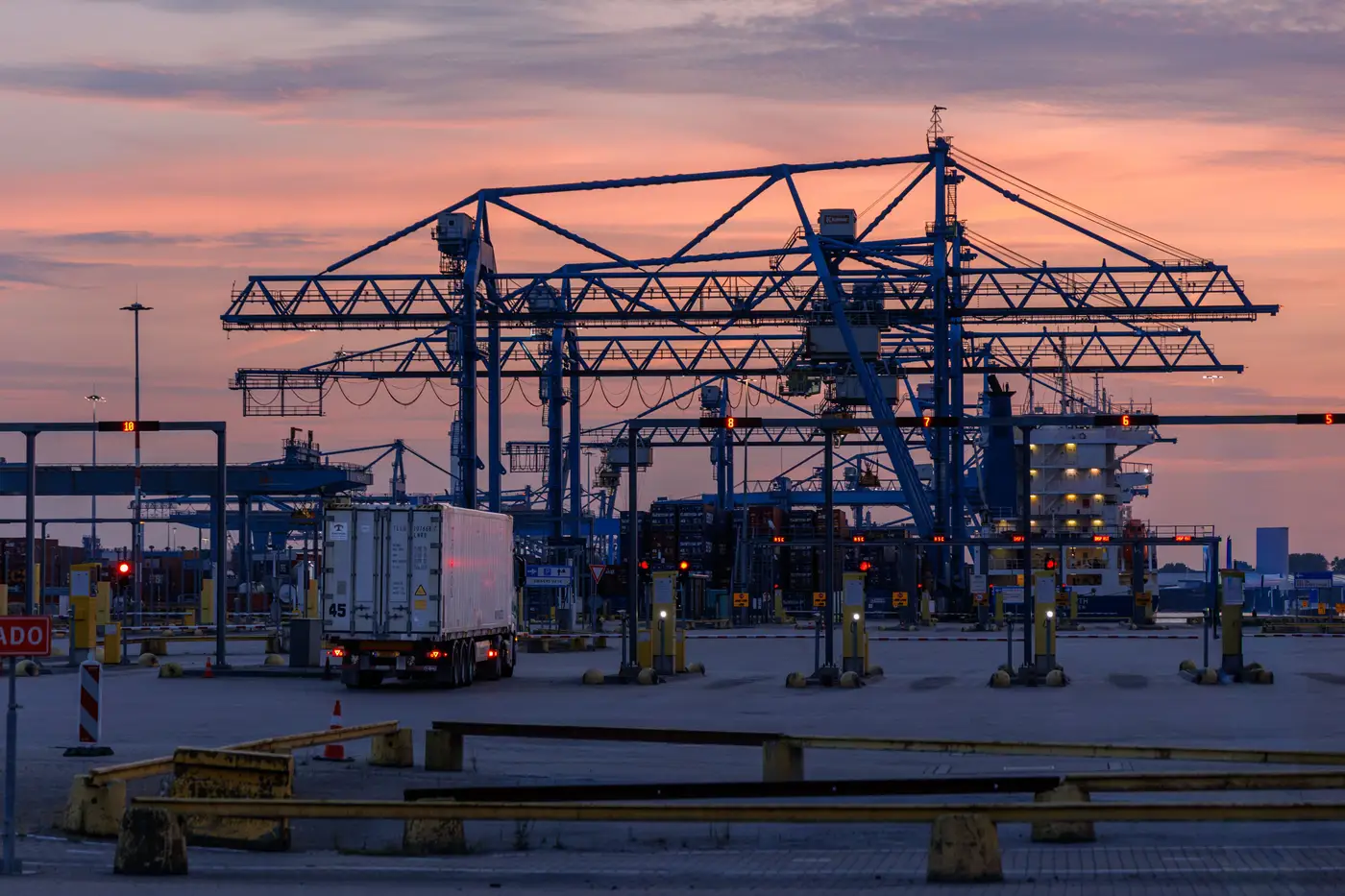
A booking confirmation shows you a string of port codes in a specific order: load port, one or two transshipment or direct calls, then your discharge port, then wherever the vessel goes after it drops your box. That order is the rotation: the sequence the vessel sails, with every call on the string affecting the calls that come after it.
Most planners never think about rotation until a carrier changes it. Then a cargo that was supposed to land on a Tuesday lands the following Monday, and nobody on the carrier side can tell you exactly why beyond "schedule change."
Port rotation, defined
A port rotation is the fixed order of port calls a vessel string makes on a loop, usually published as part of a service's schedule. A typical Asia-to-US-West-Coast string might run Shanghai, Ningbo, Busan, Los Angeles, Oakland, then back across the Pacific. The rotation tells you which port your container gets discharged at and roughly where that call sits in the voyage.
What it doesn't tell you is whether the vessel will hit every call in that order this trip. Carriers publish rotations months out, then revise them constantly based on demand, equipment position, and congestion on the string. A rotation is a plan the carrier intends to follow, right up until it has a reason not to.
Why carriers change rotation mid-string
A few things trigger a rotation change, and none of them are rare:
- Blank sailings. The carrier cancels a scheduled voyage to manage capacity. The next sailing absorbs the skipped volume, which shifts every downstream call later.
- Port omissions. If a terminal is backed up, the carrier may skip the call entirely and roll your cargo to the next vessel in the string, sometimes weeks out.
- Vessel swaps. A bigger or smaller ship gets substituted mid-rotation to match demand, and the replacement vessel doesn't always keep the same call order or speed.
- Rotation reshuffles. Some strings reorder which port gets called first when terminal congestion makes it faster to discharge elsewhere first and backhaul to the delayed port.
Any one of these moves your discharge call later in the sequence, and because a vessel can't un-sail a leg, the time lost upstream doesn't come back. It compounds every call after it.
How a schedule change becomes days on your specific lane
This is the part that costs money. A rotation change at the load port doesn't just delay the vessel by the number of days it sat idle. It pushes your call back relative to every other port still ahead of yours on the string, and if your port is near the end of the rotation, you absorb delay from every omission or congestion event that happened at every call before you.
Add a transshipment leg and it gets worse. A feeder vessel waiting on a delayed mother vessel at the hub port doesn't just wait the mother vessel's delay. It waits for its own slot in the feeder's rotation to open back up, which can mean another sailing cycle entirely, not just a few days.
This is also why two importers on the same vessel, discharging at different ports, can see wildly different slip. The container going to the first call on the rotation might land close to schedule. The one going to the last call eats the full accumulated delay of everything that happened upstream, plus whatever yard congestion is waiting at the destination terminal itself.
Standard tracking tools show you the carrier's current ETA, which updates after the fact once the schedule change has already happened. By the time that number moves, your trucking slot, warehouse labor, and customer commitment were already built around the old date.
That's the gap Lead Time Risk is built to close: instead of a generic port congestion score, it watches vessel queue, terminal fill, and yard dwell on the specific lane you've registered and turns that into a daily expected slip-day number for your shipment, so a rotation change shows up as days added to your lane before the carrier's ETA catches up.
If you're tired of guessing how many days to pad onto a lane that keeps getting reshuffled, that's the problem this tool was built to answer.